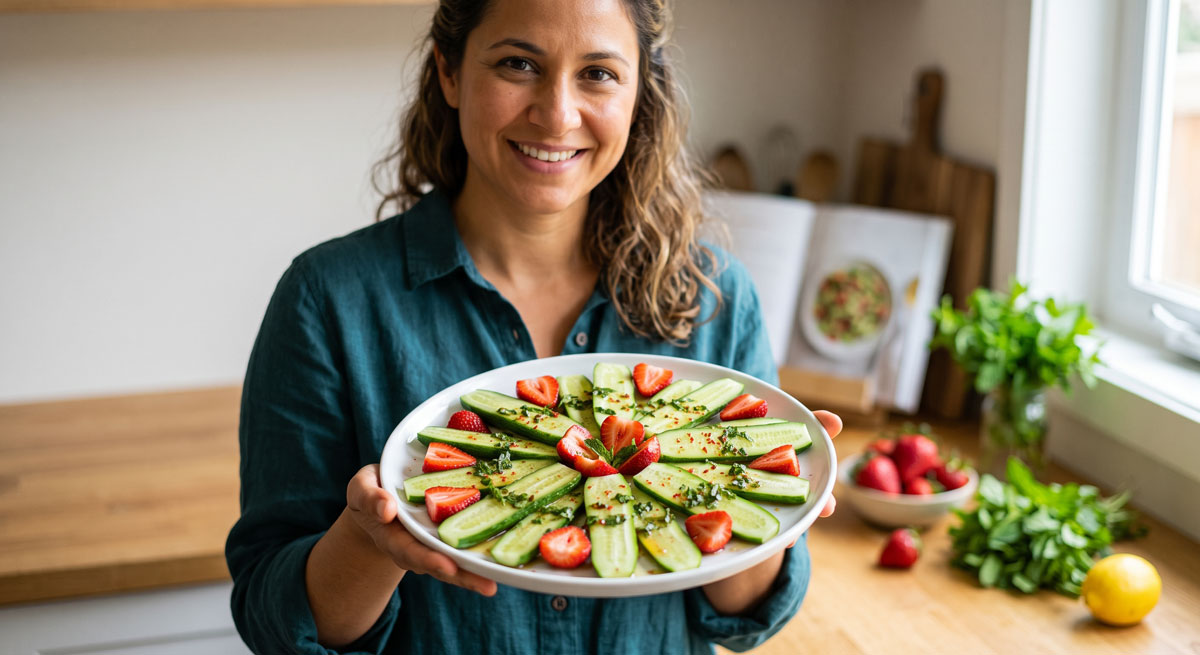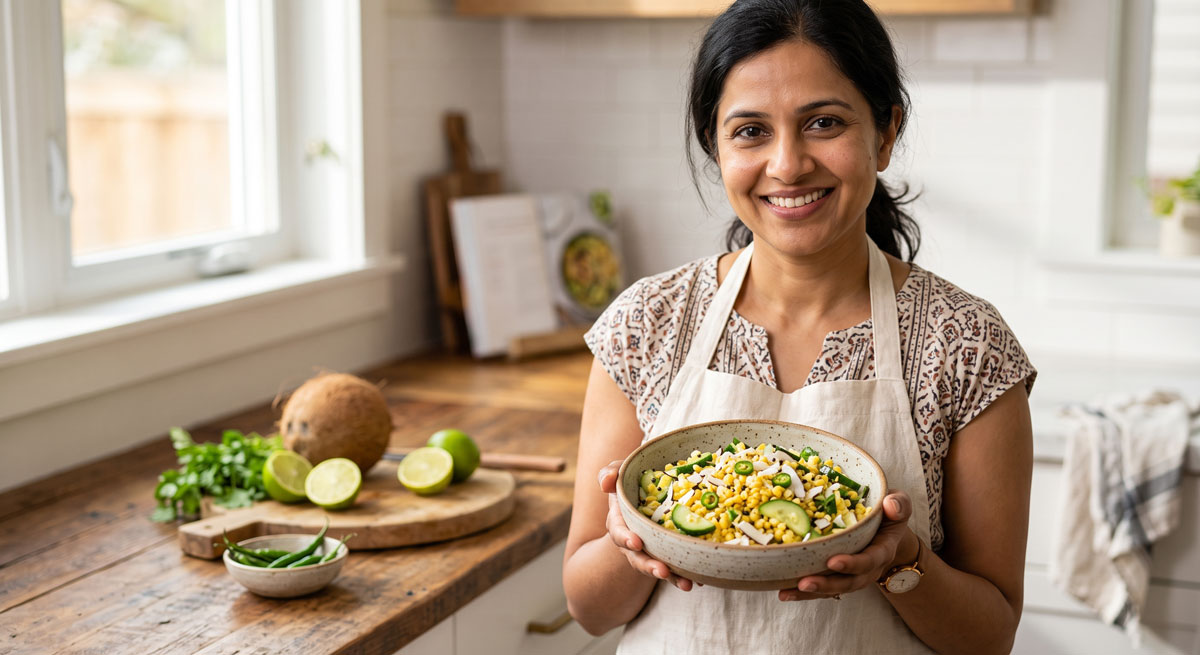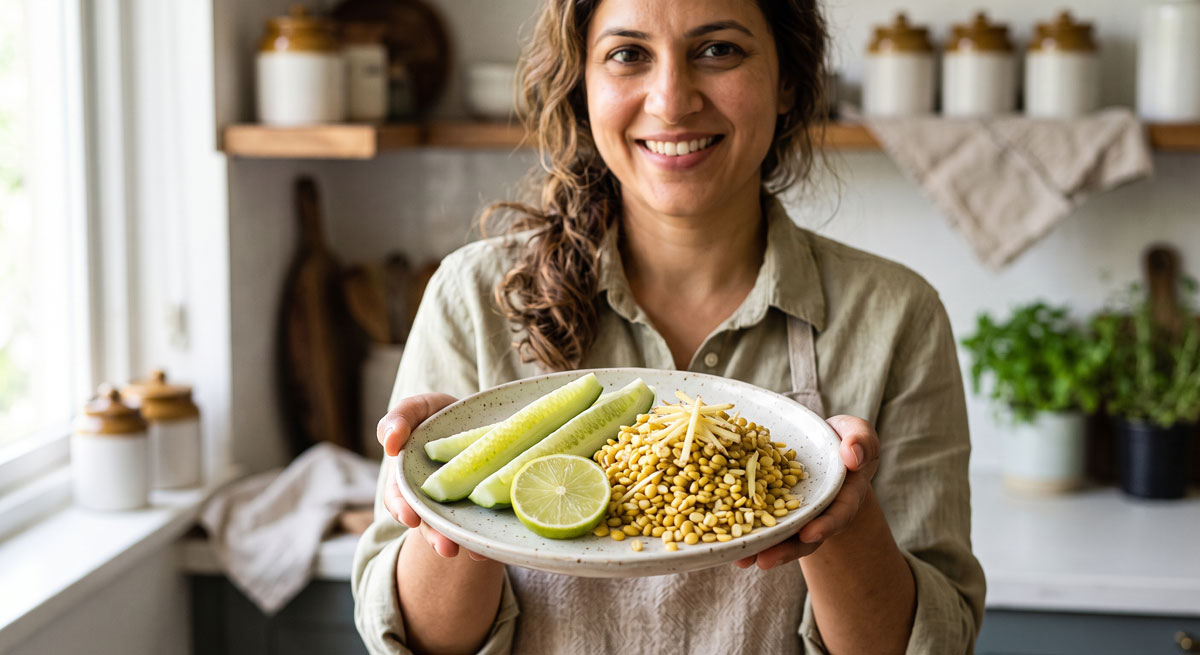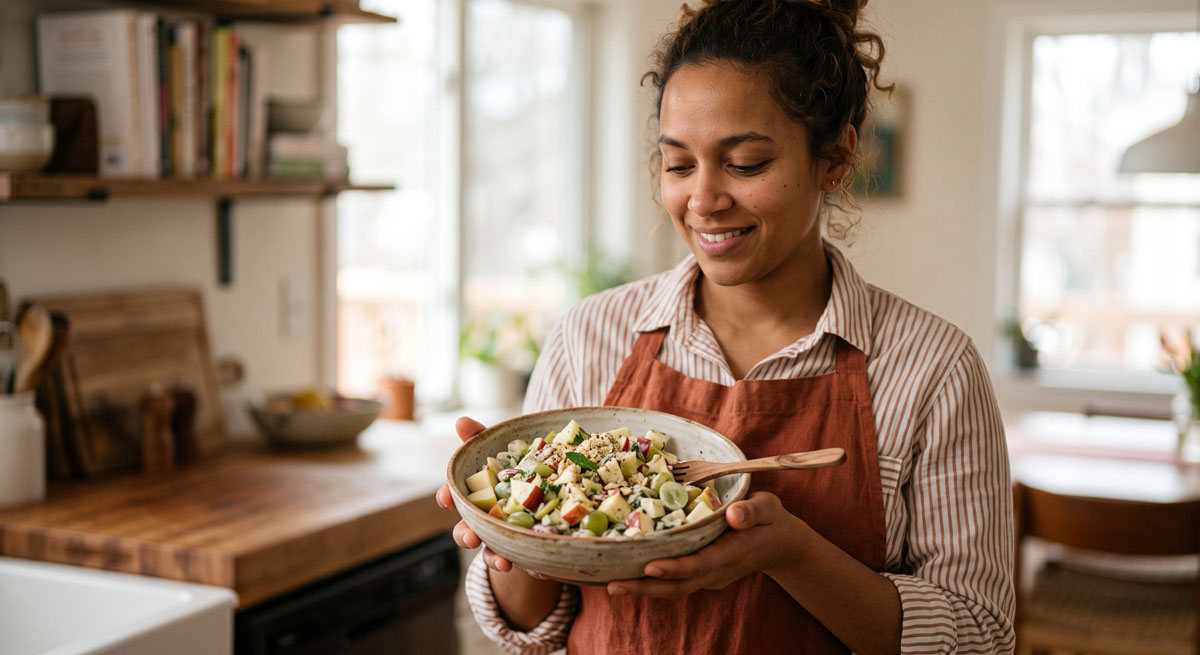

There’s something truly magical about turning tiny, hard seeds into a crunchy, vibrant food with just a bit of water—it feels like a real-life “Jack and the Beanstalk” moment right in your kitchen! While you can easily find pre-sprouted legumes at most supermarkets, sprouting your own is a rewarding experience. The real magic, however, is in the nutrition. Sprouting kick-starts the germination process, causing nutrients like potassium, protein, and B vitamins to skyrocket, making them extraordinarily good for you. This salad harnesses that power, combining fresh, crisp sprouts with a rainbow of vegetables and a punchy mustard dressing. It’s the perfect, lively companion to any dal, curry, or rice dish.
Ingredients
• For the Salad
• ½ pound / 225g ripe baby plum tomatoes
• ½ pound / 225g red radishes, trimmed
• 8 scallions, trimmed
• ½ a cucumber
• ¾-inch / 2cm piece of ginger, peeled
• 1¼ cups / 30g cilantro, finely chopped
• ½ pound / 225g sprouted mung beans or mixed legumes
• For the Zesty Mustard Dressing
• 2 tablespoons whole grain mustard
• 1 teaspoon salt
• 1 teaspoon sugar
• 2 tablespoons canola oil
• juice of ½ a lemon
Instructions
1. Prepare the vegetables. Finely dice the tomatoes. Thinly slice the radishes and scallions. Halve the cucumber lengthwise, use a teaspoon to scoop out the seeds, and then finely dice the flesh. Mince the peeled ginger into tiny pieces.
2. In a large serving bowl, combine all the chopped vegetables, cilantro, and the sprouted beans.
3. In a small bowl or jar, whisk together the whole grain mustard, salt, sugar, canola oil, and fresh lemon juice until well combined.
4. Pour the dressing over the salad and toss gently to coat everything evenly. Serve immediately for the best crunch.
Nutritional Information
• The Power of Sprouts
• Sprouting transforms a legume’s nutritional profile by initiating the germination process.
• Key nutrients like potassium, protein, and various B vitamins can quadruple, making sprouts a true superfood.
• This process makes the nutrients more bioavailable and easier for your body to digest and absorb.
Pro Tips
• For a make-ahead option, chop the vegetables and prepare the dressing in advance, storing them in separate airtight containers in the fridge. Combine with the sprouts just before serving to maintain freshness and crunch.
• Feel free to substitute the mung beans with other sprouted legumes like lentils, chickpeas, or adzuki beans.
• For an extra layer of flavor and texture, add a handful of toasted sesame seeds or chopped peanuts to the finished salad.
• Adjust the zing by adding a finely chopped green chili or a pinch of red pepper flakes to the dressing.
FAQ
Q: Is this sprouted bean salad a good source of protein
A: Yes, it is. Sprouting significantly increases the protein content in mung beans and makes it more bioavailable. This salad provides a healthy dose of plant-based protein, making it an excellent choice for a vegetarian or vegan diet.
Q: Can I use other beans or a different oil in this recipe
A: Absolutely. You can easily substitute sprouted mung beans with other sprouted legumes like lentils, chickpeas, or adzuki beans. For the dressing, feel free to use olive oil or avocado oil instead of canola oil.
Q: How can I meal prep this salad for the week
A: For best results, store the chopped vegetables, the sprouted beans, and the dressing in separate airtight containers in the refrigerator. They will stay fresh for up to 3-4 days. Combine and toss them together just before you’re ready to eat to ensure maximum crunch.
Q: Do I have to sprout my own beans for this salad
A: While sprouting your own beans is a rewarding and cost-effective process, it’s not required. You can find pre-sprouted mung beans or mixed legumes in the produce section of most supermarkets for convenience.