
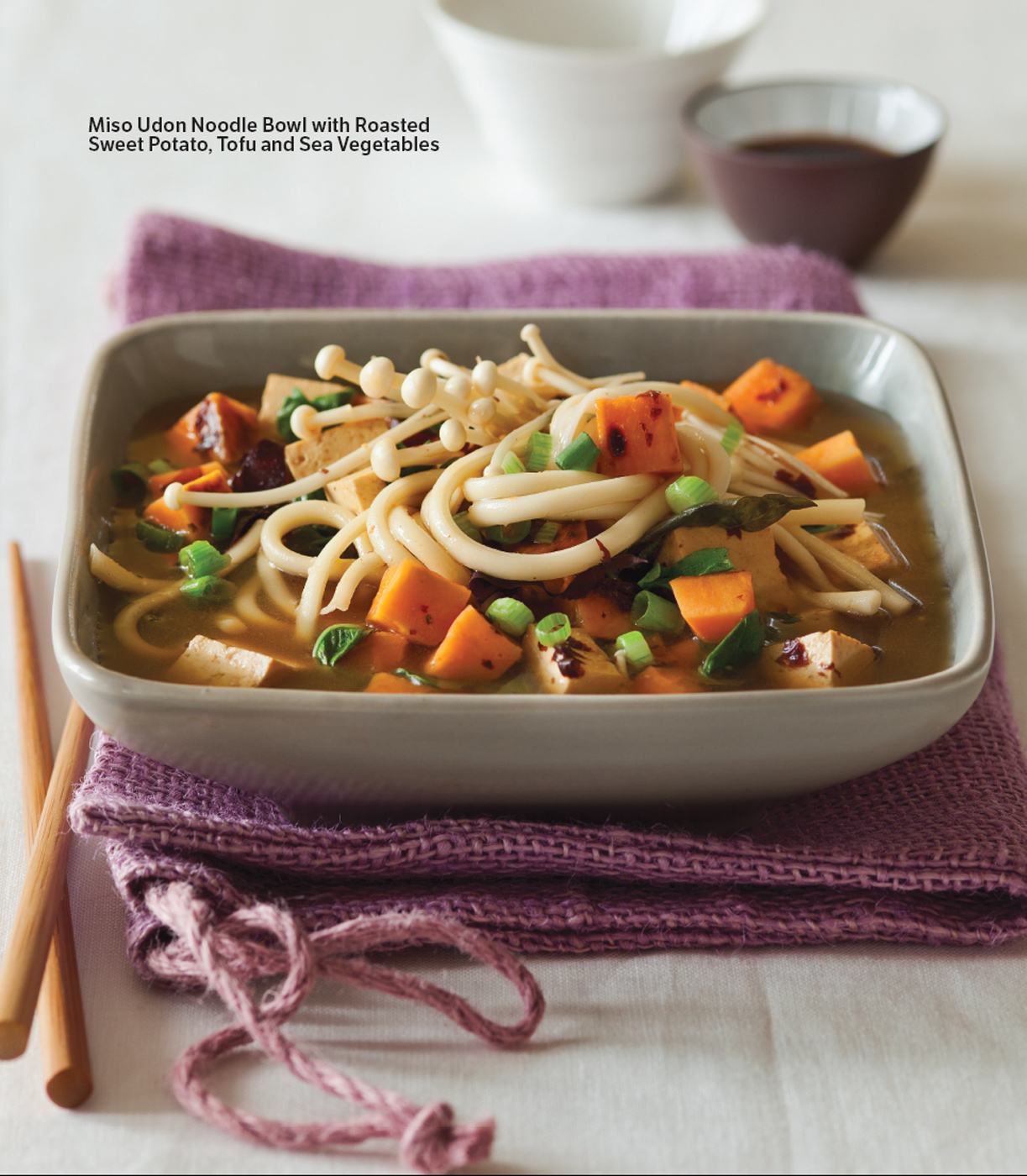
There’s something incredibly comforting about a steaming bowl of noodle soup, and this Miso Udon Bowl is my absolute go-to. It’s a beautiful symphony of flavors and textures, from the sweet, roasted sweet potato to the savory, umami-packed miso broth. What truly makes this dish special, though, are the sea vegetables. Wakame and dulse not only add a unique, oceanic depth but also infuse the broth with a powerhouse of vitamins and minerals. It’s a simple, soul-warming meal that nourishes you from the inside out.
Ingredients
• PREP: 15 minutes | COOK: 30 minutes | YIELD: 5 servings
• 1 large sweet potato, peeled and diced into ½-inch pieces
• 1 Tbsp / 15 ml extra virgin olive oil
• 1 tsp / 5 ml grated ginger
• 12 oz / 340 g udon noodles
• 4 cups / 950 ml low-sodium mushroom broth, vegetable broth or a combination
• 2 Tbsp / 30 ml red miso
• 1 Tbsp / 15 ml low-sodium soy sauce or tamari
• 4 cups / 950 ml fresh baby spinach
• 1 Tbsp / 15 ml cut wakame (dried seaweed)
• 1/3 cup / 80 ml dried dulse (strips)
• 4 scallions, thinly sliced crosswise, divided
• 8 oz / 225 g firm tofu, drained and diced into ½-inch cubes
• 2 oz / 57 g enoki mushrooms, root ends trimmed
• Sesame oil and sambal oelek, for serving
Instructions
1. Preheat your oven to 425°F / 215°C. On a baking sheet, toss the diced sweet potato with olive oil and grated ginger. Roast for 15 to 20 minutes, until golden brown and tender.
2. While the sweet potato roasts, cook the udon noodles according to package directions. Drain, rinse with cold water to prevent sticking, and set aside.
3. In a large pot, combine the broth and 4 cups / 950 ml of water. Bring to a simmer over medium heat. In a small bowl, whisk the miso with a few tablespoons of the warm broth until smooth, then stir it back into the pot along with the soy sauce or tamari.
4. Stir in the spinach, wakame, dulse, and half of the sliced scallions. Add the roasted sweet potato and diced tofu, and let it all simmer for about 1 minute to heat through and wilt the spinach.
5. To serve, divide the cooked noodles among 5 bowls. Ladle the hot soup over the noodles. Top with fresh enoki mushrooms and the remaining scallions. Drizzle with sesame oil and add a spoonful of sambal oelek for a touch of heat, if desired.
Nutritional Information
• Per serving (approx. 2 cups soup and 2½ oz noodles)
• Calories: 228
• Protein: 8 g
• Carbohydrates: 31 g
• Total Fat: 7 g
• Saturated Fat: 1 g
• Fiber: 4 g
• Sodium: 403 mg
• Cholesterol: 0 mg
Pro Tips
• For a richer, more complex broth, use a combination of mushroom and vegetable broths.
• To avoid destroying its beneficial probiotics, never boil miso. Add it at the end of cooking over low heat.
• For a firmer texture and extra flavor, pan-fry or bake the tofu cubes until golden before adding them to the soup.
• Feel free to add other vegetables like bok choy, shiitake mushrooms, or edamame along with the spinach.
FAQ
Q: Is this Miso Udon Bowl recipe vegan
A: Yes, this recipe is naturally vegan as written. All ingredients like tofu, miso, and vegetable broth are plant-based. Just ensure your specific brand of udon noodles and broth do not contain any animal-derived ingredients.
Q: How can I add more protein to this vegetarian soup
A: To boost the protein content, you can double the amount of firm tofu. For even more variety and protein, consider adding a cup of shelled edamame along with the spinach or topping the soup with pan-fried seitan.
Q: What if I can’t find wakame or dulse
A: If you can’t find wakame or dulse, you can substitute with other sea vegetables like torn nori sheets added just before serving. Alternatively, you can omit the sea vegetables, though the soup will have a less oceanic, umami flavor. Most Asian markets or well-stocked grocery stores carry them in the international aisle.
Q: What is the best way to store and reheat leftovers
A: For best results, store the soup broth separately from the cooked udon noodles in airtight containers in the refrigerator for up to 3 days. When ready to eat, gently reheat the broth on the stovetop until warm (do not boil), and pour it over the cold noodles in a bowl. This prevents the noodles from becoming mushy.