Ingredients
- 1.25 cups (9.17 oz / 260 g) split urad dal, without skins
- 0.67 cups (5.41 oz / 160 ml) water (for grinding)
- 0.5 tsp (0.07 oz / 2 ml) yellow asafetida powder (hing)
- 0.5 tsp (0.04 oz / 2 ml) freshly ground black pepper
- 0.5 tsp (0.09 oz / 2 ml) salt
- 5 large (approx. 14–18 in / 35–45 cm) or 12 small arbi leaves (taro leaves/elephant ears)
- 10–12 medium (40 oz / 1.25 kg) plum tomatoes, blanched and peeled
- 1 pinch baking soda
- 1.25 cups (10 oz / 300 ml) ghee or safflower oil
- 0.5 tbsp (0.25 oz / 7 ml) cumin seeds
- 1 tsp (0.18 oz / 5 ml) black mustard seeds
- 1 tsp (0.11 oz / 5 ml) turmeric
- 1 tbsp (0.21 oz / 15 ml) ground coriander
- 0.5 tbsp (0.14 oz / 7 ml) garam masala
- 0.25 tsp (0.02 oz / 1 ml) paprika or cayenne pepper
- 1 tsp (0.18 oz / 5 ml) salt (for the sauce)
- 1.25 cups (10.5 oz / 300 ml) plain yogurt or sour cream
- 3 tbsp (0.15 oz / 45 ml) finely chopped fresh parsley or coriander (cilantro)
Instructions
- Clean and wash the urad dal thoroughly, then place it in a bowl and cover with 2 inches (5 cm) of water to soak for 4–6 hours before rinsing and draining again.
- Transfer the drained dal to a food processor with 0.67 cups (160 ml) of water and process for 4–5 minutes until the purée is smooth and fluffy, adding a splash more water only if necessary to keep the blades moving.
- Incorporate the asafetida, black pepper, and 0.5 tsp (2 ml) of salt into the dal purée, mixing well and dividing the paste into equal portions based on the number of leaves you have prepared.
- Prepare the arbi leaves by washing them and trimming the stalks, then fold each leaf in half (glossy side in) to carefully cut away the thick central rib with a sharp knife.
- Blanch the trimmed leaves in boiling water with a pinch of baking soda for 4–5 minutes to remove bitterness, then rinse in cold water and set aside.
- Prepare the tomato sauce base by coring the blanched tomatoes, squeezing the pulp through a strainer to remove seeds, and then thinly slicing the remaining tomato flesh.
- To assemble the packets, lay a leaf (or half a large leaf) lighter-side down and spread an even layer of dal purée (0.125–0.25 inch / 3–6 mm thick) over the surface, leaving a 0.5-inch (1.5 cm) border.
- Fold the leaf in half lengthwise, spread another layer of purée on top, and fold again into quarters to form a small, square packet, patting gently to ensure the dal is evenly distributed.
- Steam the prepared packets in a steamer for 15 minutes, then allow them to cool (you can refrigerate them for up to 8 hours at this stage if making ahead).
- Heat the ghee or oil in a large frying pan over moderately high heat and fry the packets in a single layer for 5–6 minutes per side, pressing down with a slotted spoon until they are richly browned and crisp.
- Remove the fried packets to a strainer to drain, then cut each one into 1.5-inch (4 cm) squares and arrange them in a single layer in a buttered baking dish.
- Use the remaining oil in the pan to fry the cumin and mustard seeds until the mustard seeds pop, then add the tomato pulp, sliced tomatoes, turmeric, coriander, garam masala, paprika, and salt.
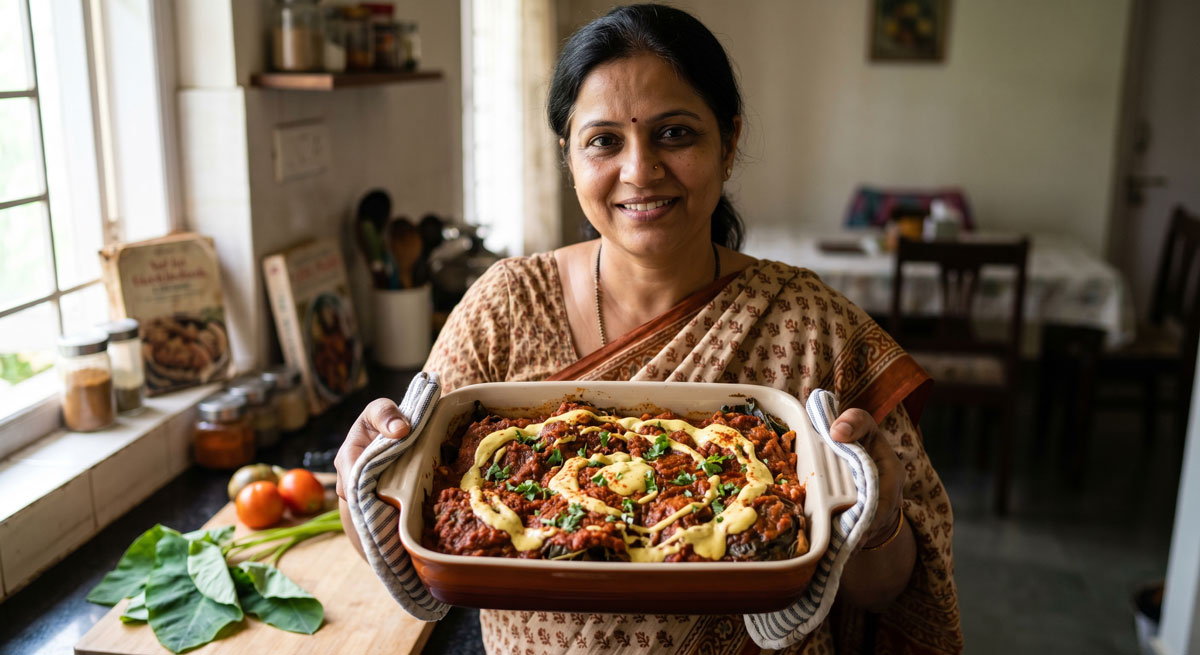
- Simmer the tomato sauce for 15 minutes before pouring it over the arranged leaf squares and spooning the yogurt or sour cream across the top.
- Bake the dish in a preheated 350°F (180°C) oven for 25 minutes until the top is beautifully browned, then let it rest for 15 minutes to firm up before serving garnished with fresh herbs.
Estimated Nutritional Information (Per Serving)
- Calories: 485 kcal
- Total Fat: 32g
- Total Carbohydrates: 29g
- Protein: 12g
Pro Tips
- The "Lasagna" Rule: Just like a great lasagna, this dish needs to rest. Once you pull it out of the oven, wait at least 15–20 minutes before cutting into it. This allows the dal to firm up and the layers to set, ensuring clean, beautiful squares for serving.
- Master the Rib Removal: Don't skip the step of removing the thick central rib from the arbi leaves. If left in, the rib remains tough and stringy even after steaming and frying, which ruins the delicate mouthfeel of the final dish.
- Monitor Dal Consistency: When grinding your soaked urad dal, add water a tablespoon at a time. The purée should be thick and spreadable—like a stiff hummus. If it's too runny, it will leak out of the leaves during the folding process.
- Freshness Check: Look for leaves that are vibrant green and flexible. If the edges are yellow or dry, they will crack when you try to fold them into packets for your Urad Dal Bhara Arbi Patta.
Frequently Asked Questions
Are arbi leaves (taro leaves) safe to eat without cooking? No, you must never eat arbi leaves raw. They contain calcium oxalate crystals, which can cause severe itching and irritation in the throat and mouth. Steaming and blanching them with a pinch of baking soda, as we do in this Urad Dal Bhara Arbi Patta recipe, neutralizes these crystals and makes them safe and delicious to eat.
Can I substitute the urad dal with another lentil? Absolutely. While Siddhartha Das’s original recipe from Madhya Pradesh uses urad dal for its signature fluffiness, you can use chana dal or moong dal. Just be sure to adjust the water content during grinding, as different lentils absorb moisture differently.
How do I prevent the "itchy" sensation sometimes associated with taro leaves? The secret is acidity and heat. Blanching the leaves in water with baking soda is the first line of defense. The second is the tomato and yogurt sauce in this Urad Dal Bhara Arbi Patta; the acid in the tomatoes and sour cream further helps break down any remaining irritants.
Can I make this dish vegan? Yes! To make a vegan version of Urad Dal Bhara Arbi Patta, simply replace the ghee with a neutral high-smoke-point oil (like avocado or safflower oil) and swap the yogurt/sour cream for a thick cashew cream or a plain plant-based yogurt alternative.