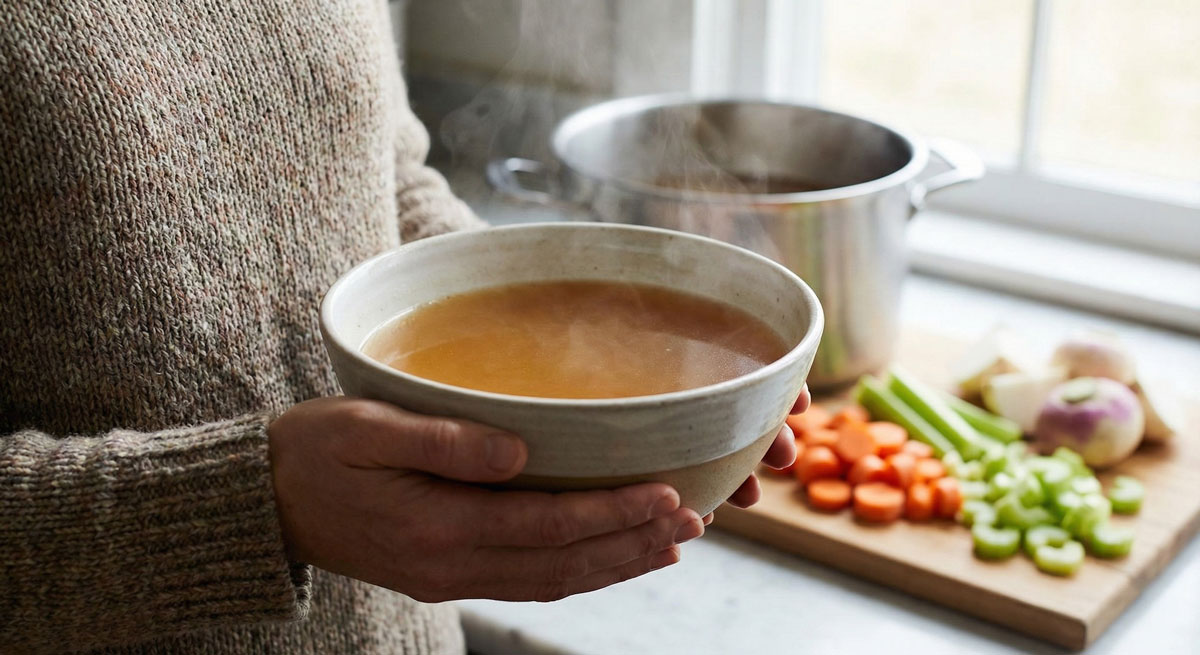
There’s a special kind of magic in a pot of homemade Root Vegetable Stock simmering on the stove. It’s a simple kitchen ritual that fills your home with the most incredible, earthy aroma—a comforting blend of sweet carrots, warm ginger, and fragrant coriander. This liquid gold is the secret to unlocking a deeper, richer flavor in your soups, stews, and sauces that you just can’t find in a box. Plus, it’s the perfect, no-waste way to transform those forgotten veggies in your crisper into something truly spectacular.
Ingredients
• 2 tbsp / 1 oz / 28g ghee or unsalted butter (or olive oil for vegan)
• 3 large carrots, ~7.6 oz / 215g, scraped and coarsely chopped
• 3 large celery stalks with leaves, ~4.5 oz / 128g, coarsely chopped
• 1 medium-sized potato, ~5.3 oz / 150g, cut into 0.5-inch / 1.5 cm cubes
• 1 large turnip, ~6 oz / 170g, coarsely chopped
• 12 cups / 101.4 fl oz / 3 L water
• 1 small cassia or bay leaf
• 2 tbsp / 0.4 oz / 11g coriander seeds
• 1 tsp / 0.1 oz / 3g cumin seeds
• 0.5 tsp / 0.05 oz / 1g black peppercorns
• 0.5-inch / 1.5 cm piece fresh ginger root, ~0.2 oz / 6g, julienned
• 3 whole cloves
• 2 tsp / 0.4 oz / 12g salt
• 2 overripe tomatoes, ~10 oz / 285g, chopped
Instructions
1. In a large 8-quart stockpot, melt the ghee or butter over moderately low heat. Add the chopped carrots, celery, potato, and turnip. Sauté slowly, stirring occasionally, for 15 minutes to release their natural sweetness.
2. Stir in the water, bay leaf, all spices (coriander, cumin, peppercorns, cloves), ginger, salt, and tomatoes. Increase the heat to high and bring the mixture to a full boil.
3. Immediately reduce the heat to low, partially cover the pot, and maintain a gentle simmer for 1 hour and 15 minutes. Strain the liquid through a fine-mesh sieve, discarding the solids. Use immediately, or cool completely to store.
Nutritional Information
• Per 1 cup / 250ml serving
• Calories: 35 kcal
• Total Fat: 3g
• Total Carbohydrates: 3g
• Protein: 1g
Pro Tips
• Don’t rush the initial sauté. Letting the vegetables sweat and caramelize for the full 15 minutes is key to building a deep, rich flavor base.
• Maintain a gentle simmer, never a rolling boil. This is the secret to a beautiful, clear stock rather than a cloudy one.
• This recipe is perfect for using up vegetable scraps! Add clean peels, herb stems, and leek tops from your freezer for extra flavor and nutrients.
• To cool the stock quickly for safe storage, place the pot in an ice bath in your sink before transferring it to the fridge or freezer.
FAQ
Q: How can I make this root vegetable stock vegan
A: To make this recipe completely vegan, simply substitute the ghee or unsalted butter with 2 tablespoons of olive oil or another neutral vegetable oil. All other ingredients in the recipe are naturally plant-based.
Q: What makes this stock so flavorful for vegetarian cooking
A: The deep, rich flavor comes from several key steps. First, slowly sautéing the root vegetables for 15 minutes caramelizes their natural sugars. Second, the specific blend of whole spices like coriander, cumin, and cloves, along with fresh ginger and tomatoes, creates an aromatic and complex umami-rich base perfect for enhancing any vegetarian dish.
Q: What is the best way to store homemade vegetable stock
A: Once cooled completely, you can store the stock in an airtight container in the refrigerator for up to 5 days. For longer storage, freeze it for up to 6 months. A great tip is to freeze it in ice cube trays for small, convenient portions you can add directly to sauces or when sautéing.
Q: Can I use other vegetable scraps in this stock
A: Absolutely! This recipe is perfect for using scraps. Feel free to add onion skins (for color), carrot peels, celery ends, leek tops, and parsley or cilantro stems. However, avoid using cruciferous vegetables like broccoli, cauliflower, or cabbage, as they can make the stock taste bitter.