
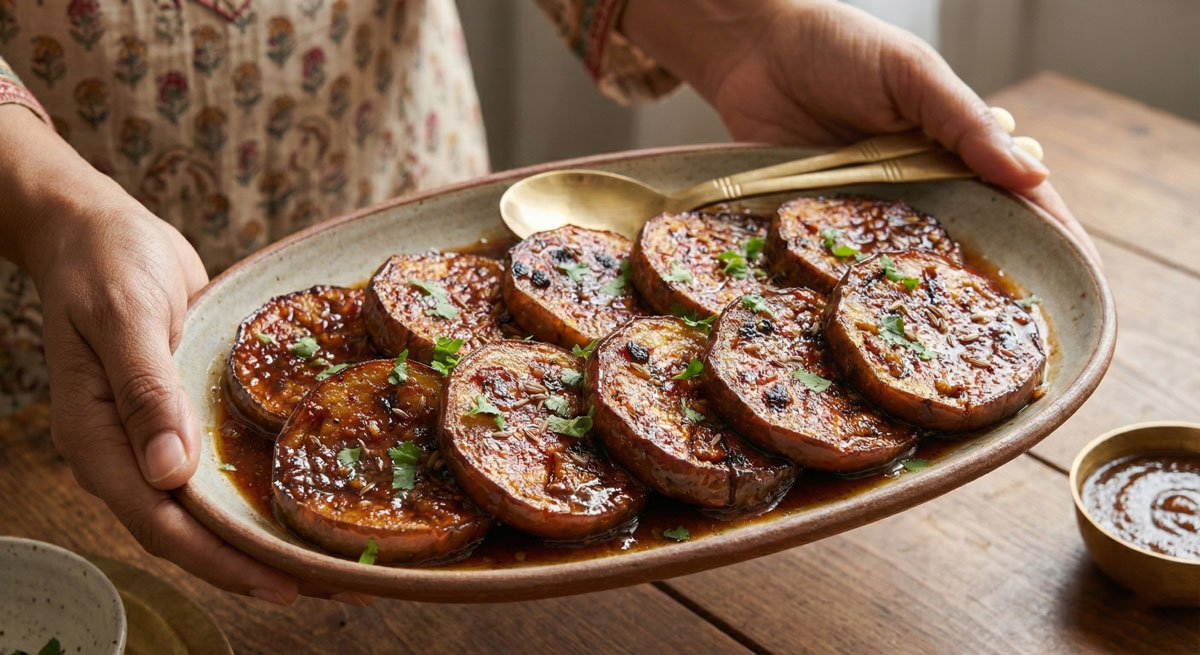
If you’re looking for a vegetable dish that truly steals the show, you’ve found it. This Sweet ‘n’ Sour Eggplant—traditionally known as Khatte Baigan Bhaji—is a spectacular Bengali delicacy that will transform your dinner table. Imagine perfectly crisp, fried eggplant slices enveloped in a shiny, tangy, and spicy glaze. It takes a little extra effort, but trust me, one bite makes it all worthwhile. This is the recipe you pull out for dinner parties or when you want to treat yourself to something truly special!
Ingredients
• 1 large eggplant approx. 24 oz to 32 oz / 680 g to 900 g, cut into 1 inch / 2.5 cm slices
• Salt for sprinkling
• 0.5 tsp cumin seeds
• 0.5 tsp black mustard seeds
• 0.5 tsp fennel seeds
• 0.25 tsp fenugreek seeds
• 0.25 tsp yellow asafetida powder (hing) *Note: If using a stronger pure asafetida, reduce amount by three-fourths.
• 0.25 tsp cayenne pepper or paprika
• 0.25 tsp chat masala, if available
• 3 tbsp jaggery, maple syrup, or brown sugar
• 3 tbsp lemon juice
• 4 tbsp water
• Ghee or vegetable oil for shallow-frying to a depth of 0.5 inch / 1.25 cm
Instructions
1. Place the eggplant slices on a tray and sprinkle them liberally with salt. Let sit for 30 minutes to draw out moisture.
2. While the eggplant sits, dry-roast the cumin, black mustard, fennel, and fenugreek seeds in a small pan over moderate heat until they darken slightly. Transfer to a spice mill and grind to a powder.
3. In a small saucepan, combine the ground spice powder, asafetida, cayenne, chat masala, sugar, lemon juice, and water. Bring to a boil, then simmer until the mixture reduces to a shiny sauce. Set aside.
4. Rinse the salt from the eggplant slices and pat them completely dry with paper towels.
5. Pour 0.5 inch / 1.25 cm of ghee or oil into a large, heavy frying pan over moderately high heat. When the oil is hot but not smoking, add eggplant slices in a single layer.
6. Fry on both sides until reddish-brown, crisp, and fork-tender. Remove with a slotted spoon and drain on paper towels. Repeat with remaining eggplant, adding more oil as needed.
7. Arrange the fried eggplant in a single layer on a cookie sheet. Brush or spoon the sauce over the slices and place under the broiler for 1-2 minutes until warm and bubbly. Serve hot.
Nutritional Information
• Per Serving (1/6th of recipe)
• Calories: 245 kcal
• Total Fat: 21g
• Total Carbohydrates: 15.5g
• Dietary Fiber: 4g
• Sugars: 9g
• Protein: 1.5g
• Sodium: 350mg
Pro Tips
• Don’t skip salting the eggplant. It draws out moisture, preventing the slices from absorbing too much oil and ensuring a creamy, not greasy, texture.
• Ensure your oil is hot enough before frying (shimmering but not smoking). Hot oil creates a crisp exterior and prevents the eggplant from becoming soggy.
• Fry in batches. Overcrowding the pan lowers the oil temperature, leading to oily eggplant. Give the slices space to get perfectly crisp.
• This dish is fantastic for entertaining. You can fry the eggplant and prepare the sauce hours ahead. Just before serving, brush on the sauce and broil for a minute to heat through.
FAQ
Q: Can I make this sweet and sour eggplant recipe vegan
A: Yes, this recipe is easily made vegan. Simply use vegetable oil or another high-smoke-point plant-based oil instead of ghee for frying. The other ingredients, including jaggery, maple syrup, or brown sugar, are vegan-friendly.
Q: Is this Bengali eggplant dish gluten-free
A: This dish is naturally gluten-free, but it’s crucial to check your asafetida (hing). Some brands compound it with wheat flour. To ensure the recipe is completely gluten-free, use a pure asafetida or one that is certified gluten-free.
Q: How can I add more protein to this vegetarian eggplant recipe
A: While this eggplant dish is a spectacular side, you can make it a more complete meal by serving it with a protein source. It pairs wonderfully with a simple lentil dal, a chickpea curry (chana masala), or alongside grilled paneer or tofu.
Q: What’s the best way to store and reheat leftover Khatte Baigan Bhaji
A: Store leftover fried eggplant in an airtight container in the refrigerator for up to 3 days. For the best texture when reheating, avoid the microwave. Instead, warm the slices in an air fryer or a preheated oven at 350°F (175°C) for 5-7 minutes until heated through and crisp.