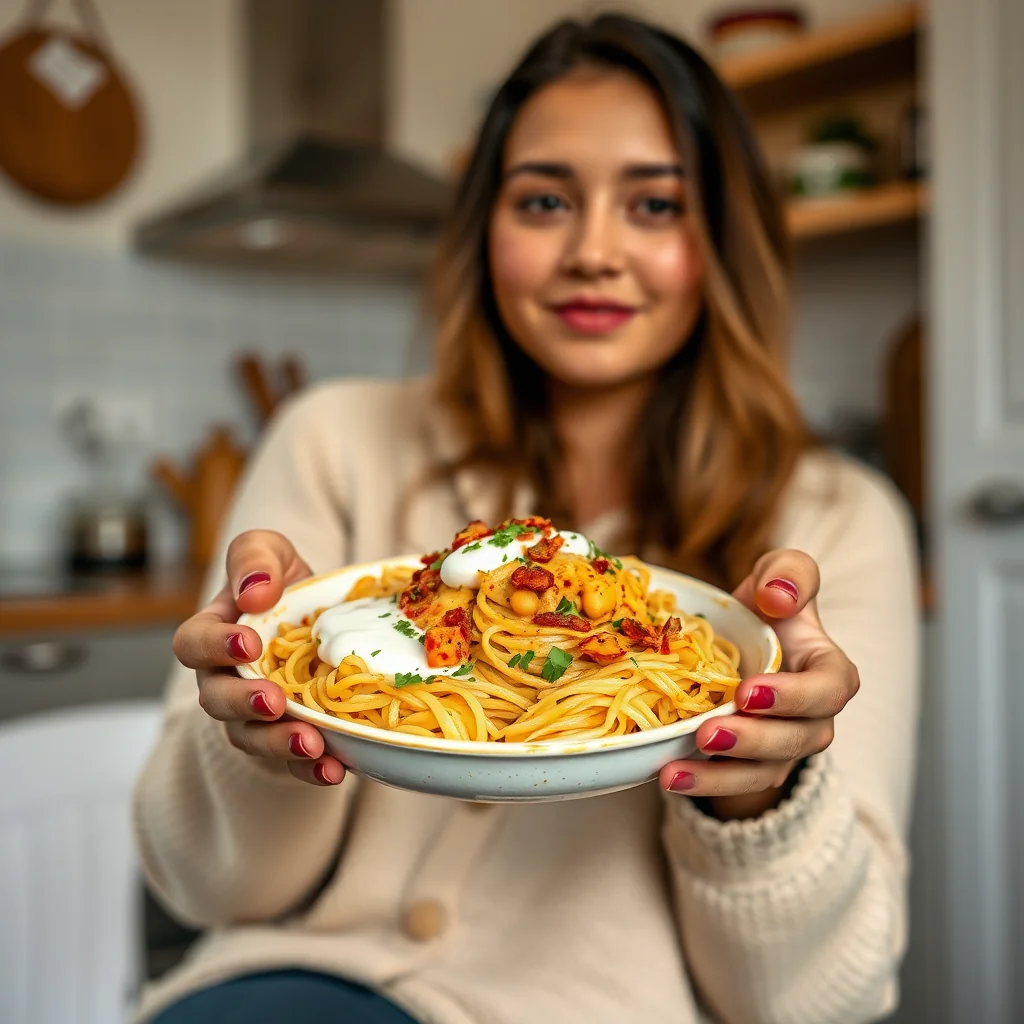
Place the 4 tbsp (0. 88 oz / 25g) of sifted chickpea flour into a 1-quart bowl. Slowly pour in 4 tbsp (2. 0 oz / 60g) of the measured water or whey, whisking vigorously to form a smooth, lump-free paste. Gradually pour in the remaining water and the 2. 5 cups (21. 1 oz / 600g) of whisked plain yogurt, stirring continuously to blend the liquids.
Stir in the 0. 5 tsp (0. 05 oz / 1. 5g) turmeric, 2 tsp (0. 1 oz / 3g) ground coriander, 0. 25 tsp (0. 02 oz / 0. 5g) paprika, 0. 5 tsp (0. 04 oz / 1g) garam masala, 1 tsp (0. 2 oz / 6g) salt, and the 1 tsp (0. 25 oz / 7g) honey if using.
Transfer the blended yogurt mixture into a heavy-bottomed 2-quart saucepan.
Place the pan over moderate heat and bring to a gentle boil, stirring constantly so the yogurt does not split.
Once boiling, reduce the heat to low and allow the Paparh Karhi to simmer for 12 minutes, giving it a stir every few minutes.
Remove the pan from the heat, scatter half of the cut paparh ribbons (approx 0. 75 oz / 21g) into the sauce, and stir gently until they begin to soften.
Fold in the remaining paparh and cover the saucepan with a lid.
Heat a small frying pan over moderate heat for 1 minute to prepare the tempering.
Toss in the 0. 5 to 1 dried red chili, 4 cloves, 1-inch cinnamon stick, and 0. 5 tsp (0. 05 oz / 1. 5g) black mustard seeds.
Dry roast these spices by shaking the pan for about 0. 5 minutes until fragrant.
Add the 2 tbsp (1. 0 oz / 28g) of ghee or butter to the pan, roasting until the butter froths and the mustard seeds begin to crackle and pop. Immediately pour this hot, spiced ghee over the Paparh Karhi and quickly cover the pan with the lid to trap the aromas.
Let it sit for 2 to 3 minutes, then gently stir in the 2 tbsp (0. 1 oz / 3g) of fresh chopped coriander before serving.
Whisk the Yogurt Thoroughly: To prevent your Paparh Karhi from splitting or looking grainy, ensure your 2. 5 cups (21. 1 oz / 600g) of yogurt is whisked until completely smooth before you add it to the chickpea flour.
Using room-temperature yogurt also drastically reduces the risk of curdling when it hits the heat.