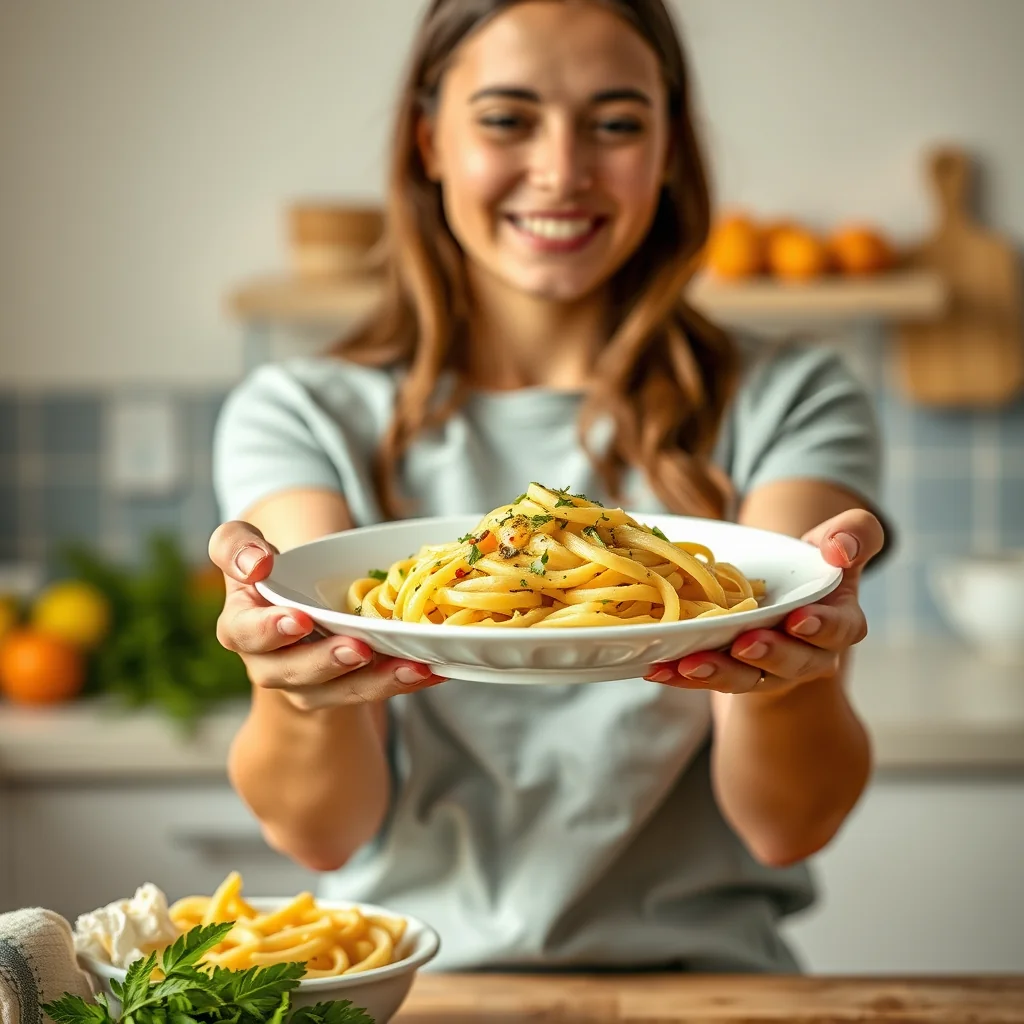
Combine : In a food processor, combine your chosen herb with the flour and salt and pulse once or twice to mix.
Add the eggs and process until a ball of dough begins to form, about 30 seconds. If the dough seems dry, add a few drops of water. If it's too sticky, add a tablespoon of flour. (To make by hand, mound the flour, salt, and herbs on a clean counter, make a well in the center, crack the eggs into it, and gradually incorporate the flour with a fork, then your hands.) 2.
Knead the Dough: Transfer the dough to a lightly floured surface and knead for 5-8 minutes, until it is smooth, firm, and elastic. 3.
Rest the Dough: Wrap the dough tightly in plastic wrap or cover with a clean cloth and let it rest at room temperature for at least 30 minutes. This step is crucial for relaxing the gluten, making the dough easier to roll. 4.
Roll the Pasta: Cut the dough into four equal pieces.
Working with one piece at a time (keep the others covered), flatten it with your palm. Run it through a pasta maker on the widest setting.
Fold the dough into thirds, like a letter, and run it through the widest setting again.
Repeat this process 2-3 times. 5. Thin the Sheets: Continue passing the dough through the machine, narrowing the setting one notch at a time, until you reach your desired thickness (usually the second-to-last setting for fettuccine or pappardelle). 6.
Cut the Noodles: Lightly flour the pasta sheet and run it through the cutter attachment of your pasta machine. Alternatively, you can gently roll the sheet up and slice it into noodles with a sharp knife.
Toss the cut pasta with a little flour to prevent sticking. 7.
Cook and Serve: Bring a large pot of salted water to a rolling boil.
Add the fresh pasta and cook for 2-4 minutes, or until al dente. Fresh pasta cooks much faster than dried!
Drain and toss with your favorite sauce immediately.
Don't skip the 30-minute rest period. It allows the gluten to relax, which is essential for a tender pasta that's easy to roll out without tearing.