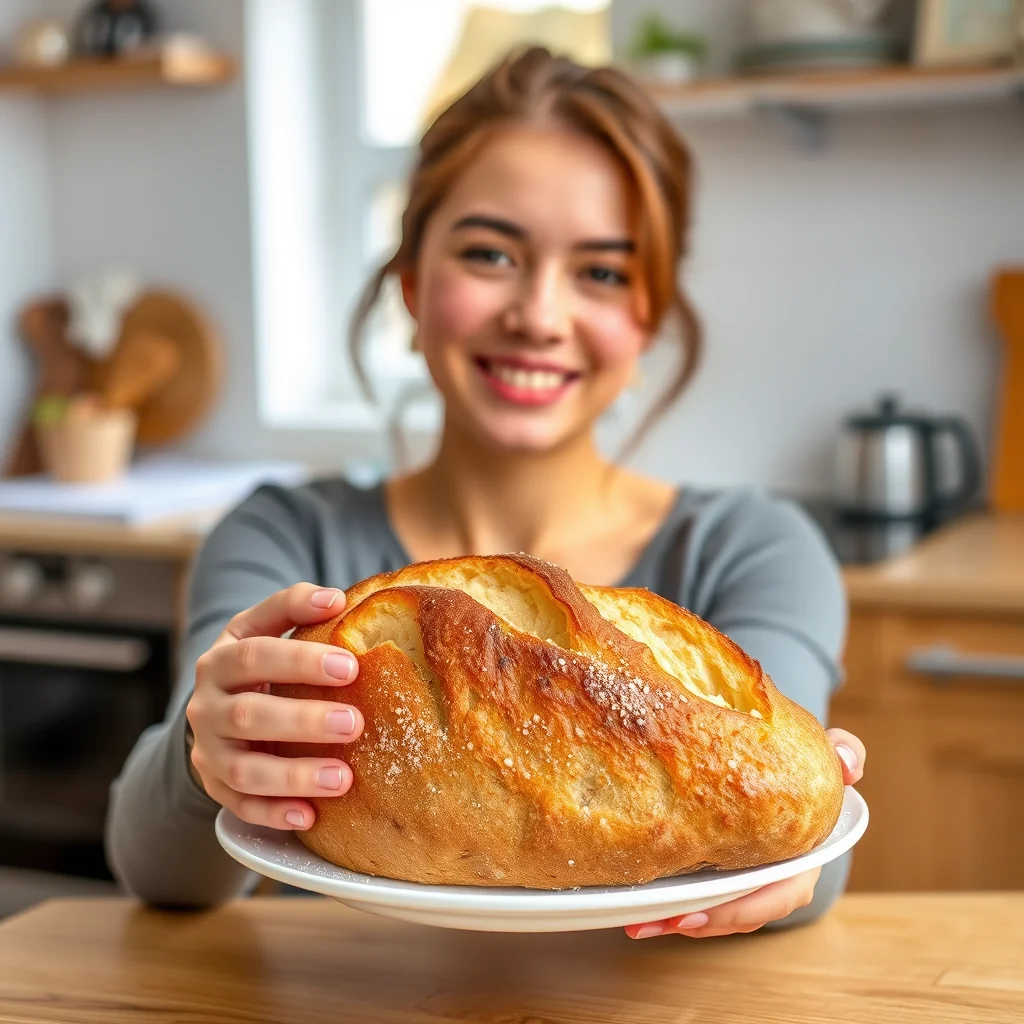
Combine the flour, salt, and yeast in the bowl of a food processor and pulse to combine.
With the machine running, slowly pour about 1 cup (240 ml) of warm water through the feed tube. Process until the dough forms a ball that is smooth and moist, but not sticky. If it’s too dry, add water 1 tablespoon (15 ml / 0.5 fl oz) at a time. If it’s too wet and sticks to the sides, add a tablespoon or two of flour. The whole process should take less than a minute.
Transfer the dough to a large, lightly oiled bowl (or leave it in the processor bowl with the blade removed).
Cover with plastic wrap and let it rise at room temperature for at least 1 hour, or until doubled in size.
Gently deflate the dough and turn it out onto a lightly floured surface.
Shape it as desired into baguettes, a round boule, or individual rolls.
Place the shaped dough on a parchment-lined baking sheet or a floured baker's couche.
Cover the loaves with a clean towel and let them rest for 30-40 minutes while you preheat your oven to 400°F (200°C).
Place a baking stone in the oven to preheat if you have one.
Just before baking, use a sharp knife or razor blade to make one or two decisive slashes across the top of each loaf.
Slide the baking sheet into the oven (or slide the loaves directly onto the hot baking stone). Immediately turn the oven temperature down to 375°F (190°C).
Bake for 20-30 minutes (for rolls) or 30-40 minutes (for loaves), until the crust is a deep golden brown and the internal temperature reaches at least 210°F (99°C) on an instant-read thermometer.
For a shinier crust, you can lightly spray the bread with water as soon as it comes out of the oven.
Let it cool completely on a wire rack before slicing to preserve the texture.
Place a shallow pan of hot water on the bottom rack of the oven to create steam, which helps the bread achieve a crispier crust and better rise (oven spring).
Don't slice into the bread while it's hot! Allowing it to cool completely on a wire rack is crucial for the interior crumb to set properly.