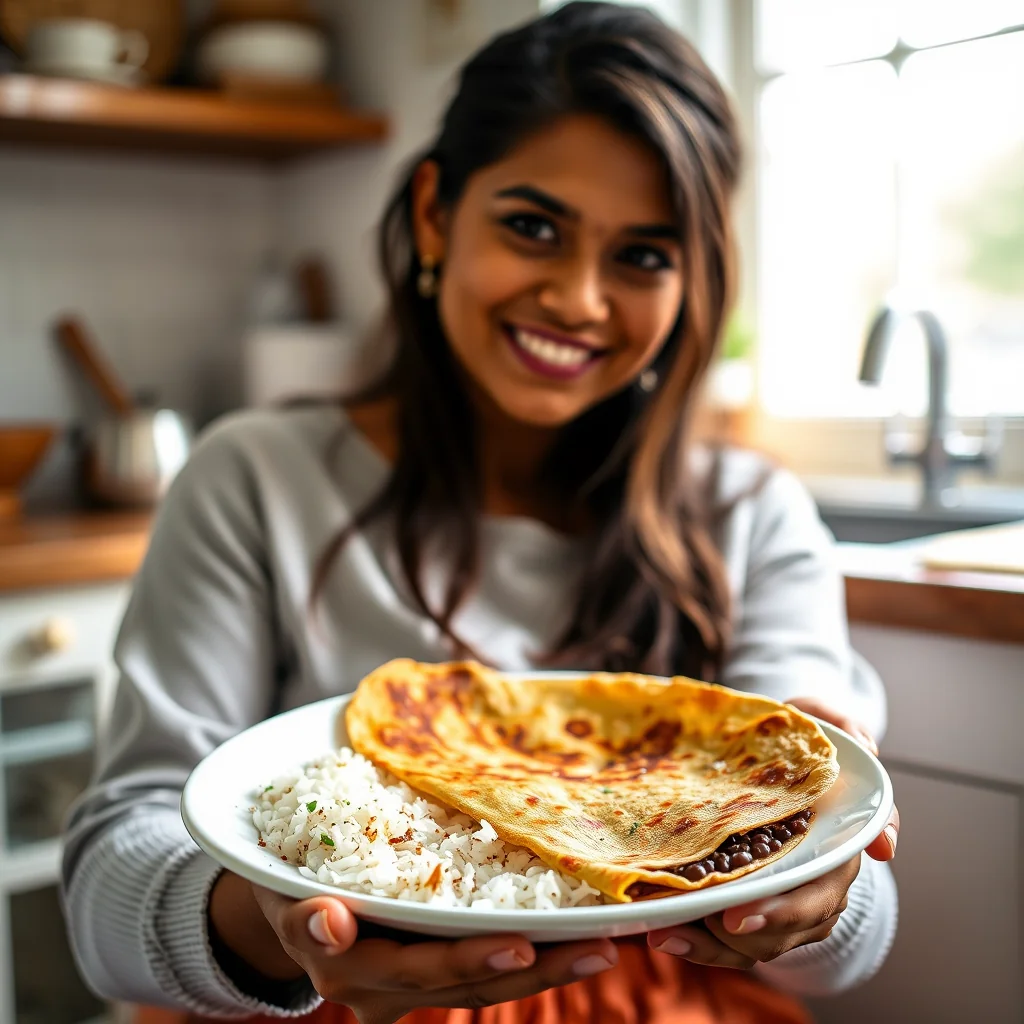
Day 1: Soaking
Rinse the rice and urad dal together under cold running water several times, until the water runs clear.
Drain thoroughly.
Transfer the rinsed rice and dal to a large bowl.
Add the fenugreek seeds and pour in the warm water.
Let it soak, uncovered, at room temperature overnight, or for at least 12 hours.
Day 2: Blending & Fermenting
The next morning, drain the soaked mixture, reserving the soaking water.
Transfer the mixture to a high-speed blender.
Blend in two batches if necessary, adding a little of the reserved soaking water as needed to create a smooth, thin batter (similar to crepe batter).
Pour the batter into a large, non-reactive bowl (ensure it's only half-full to allow for expansion).
Cover with a lid or plastic wrap and place in a warm, draft-free spot to ferment for 24 hours. An oven with just the light on works well in cooler climates.
Day 3: Cooking
The next day, the batter should look bubbly and have a pleasantly sour aroma.
Whisk the batter gently and stir in the salt.
Place a large non-stick or cast-iron skillet over low-medium heat. To test if it's ready, sprinkle a few drops of water on the surface; if they sizzle and evaporate immediately, the pan is at the right temperature.
Lightly grease the pan by dabbing a piece of paper towel in oil and wiping it across the surface.
Pour a ladleful of batter (about ¼ cup) into the center of the hot pan.
Working quickly, use the back of the ladle to spread the batter in a thin, even layer using continuous concentric circles, moving from the center outwards.
Increase the heat to medium.
Cook for about 2 minutes, or until the edges begin to crisp up and lift away from the pan.
Drizzle a little oil around the edges of the dosa.
Once the bottom is golden brown and crisp, flip the dosa and cook for another 1-2 minutes on the other side.
Slide the finished dosa onto a plate.
Before making the next one, reduce the heat to low and let the pan cool for a minute.
Repeat the process with the remaining batter, greasing the pan lightly each time.
Serve immediately.
Don't skip the fenugreek seeds! They are crucial for aiding fermentation and adding a subtle, authentic flavor to the dosas.