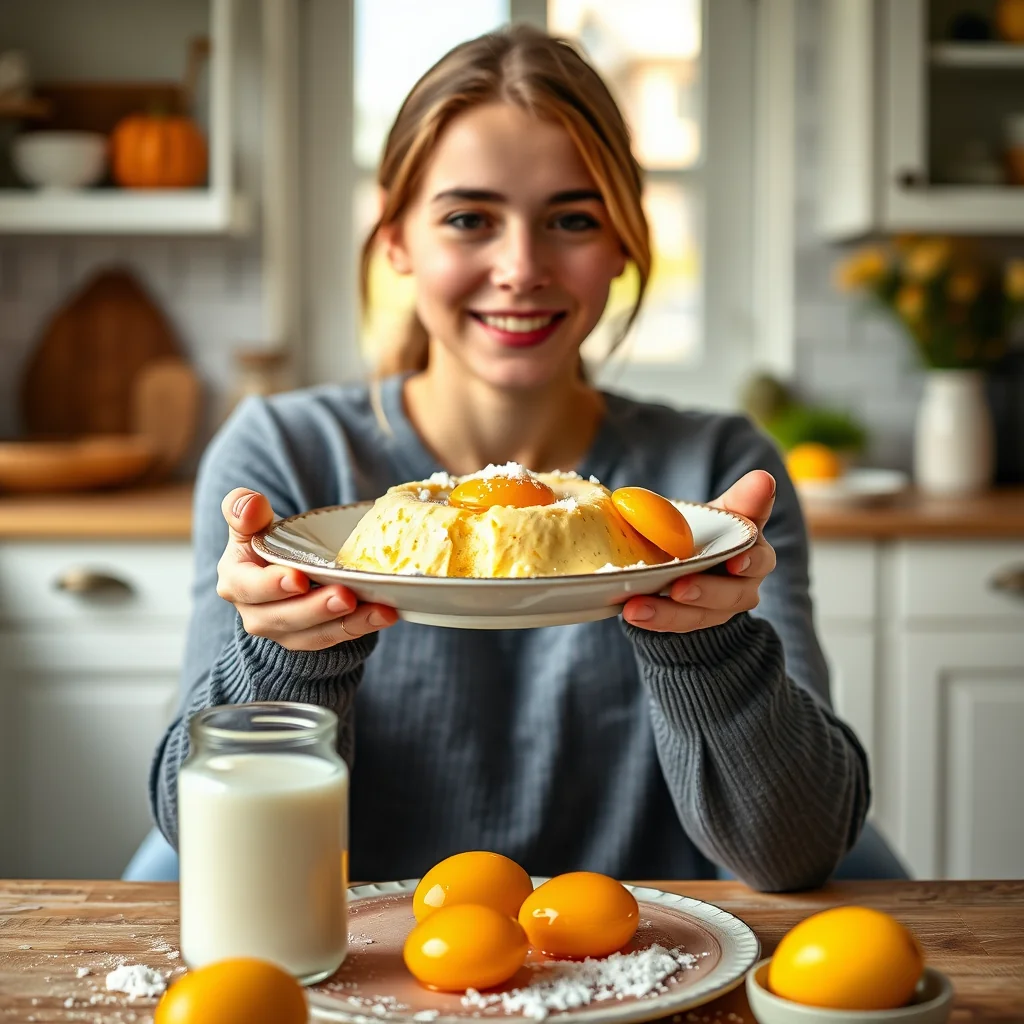
In a medium saucepan, beat the egg yolks with 1 cup / 200g (7.1 oz) of the sugar until the mixture is pale yellow and fluffy.
Stir in the milk and vanilla extract.
Place the saucepan over very low heat and cook gently, stirring constantly, until the custard thickens enough to coat the back of a spoon. This can take up to 20 minutes—be patient and do not let it boil.
Remove from heat, add the softened butter, and continue stirring until it has completely melted.
Set the custard aside to cool completely, whisking it occasionally to maintain a smooth consistency. 2.
While the custard cools, press the farmer cheese through a fine-mesh sieve into a large bowl. This step is crucial for a silky-smooth texture.
In a separate bowl, use a mixer to whip the heavy cream until stiff peaks form.
Once the custard is completely cool, beat in the remaining 2 cups / 400g (14.1 oz) of sugar, followed by the sieved cheese and the grated lemon rind. Gently fold in the whipped cream until just combined. If using, stir in the chopped almonds now. 3. Prepare your mold.
Line a large colander (or a traditional pyramid-shaped Paskha mold) with a double layer of muslin or at least 6 layers of cheesecloth, leaving plenty of overhang.
Pour the cheese mixture into the lined colander.
Fold the overhanging cloth neatly over the top of the mixture, pulling it tightly.
Place a small plate on top that fits just inside the colander, and set a heavy weight on the plate (a few cans or a cast-iron pan work well). 4.
Place the entire setup (colander, plate, and weight) over a deep bowl to catch the whey that will drain out.
Transfer it to a cool place or the refrigerator for 24 to 36 hours. The Paskha is ready when it feels firm to the touch and holds its shape. 5. To serve, carefully remove the weight and plate. Unwrap the top of the Paskha and invert it onto a serving platter. Gently peel away the cheesecloth. Decorate as desired and serve chilled, cut into small wedges or slices. It pairs beautifully with a sweet yeast cake like Kulich.
When making the egg yolk custard, use the lowest possible heat and stir constantly. This prevents the eggs from scrambling and ensures a silky-smooth base for your dessert.